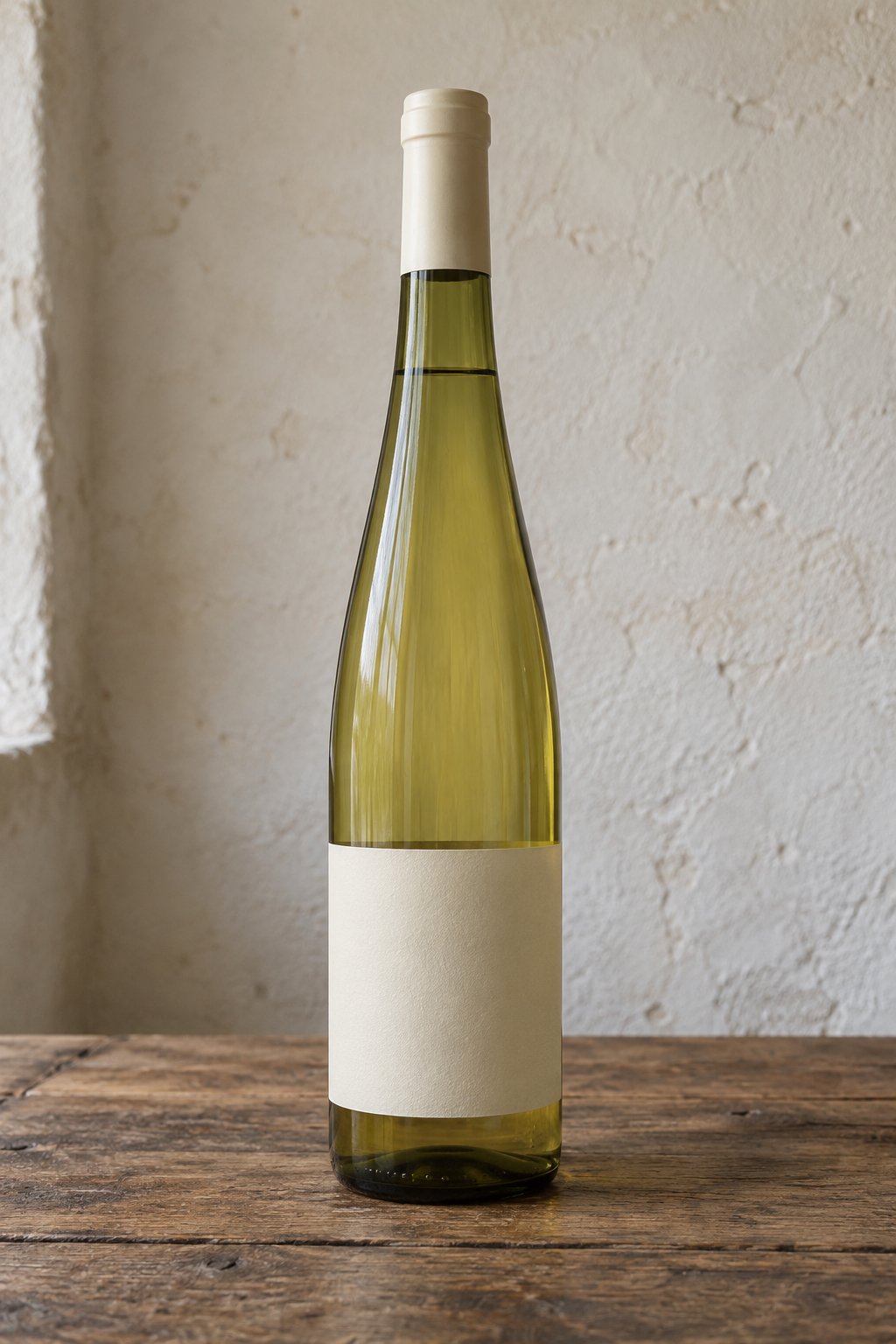
- Vintage
- 2023
- Grapes
- Riesling
- Alcohol
- 12.0% vol
- Soil
- granite & gneiss, loess
- Elevation
- 280–320 m
- Farming
- organic, in conversion
- Harvest
- by hand, mid-October
- Fermentation
- native yeast, steel
- Ageing
- 8 months on lees
- Production
- 3,200 bottles
- Serve
- 9–11 °C
- Cellar
- 5–10 years
Tasting
Pale lemon, and very still in the glass. Lime zest first, then wet stone and white currant, with a little smoke as it warms. The palate is lean and long: acidity sets the pace, the fruit stays tart, and the finish turns saline. The granite shows as grip rather than weight. It wants a few minutes of air and is better at cellar temperature than straight from the fridge. Young now; it will fill out over five years.
Food
River trout with brown butter, Pierogi with sauerkraut and mushroom, Young goat cheese
Why does it taste like this?
Descend one layer at a time.
Grape · RieslingLate-ripening, high-acid, transparent to its soil. In Poland it is the leading vinifera and the clearest test of a site.
Rhine white. Poland's leading vinifera; lime, precision, petrol with age.
Soil · graniteThin, quick to drain, low in nutrients: small berries, firm acidity, a smoky edge.
Granite & gneiss: Stress and precision. Lean fruit, firm acidity, a smoky or flinty edge; wines that age on structure.
Loess: Warm, porous, drains fast, holds just enough water. Ripe fruit, soft texture, generous aromatics.
Vineyard · Nad Potokiem, 3.2 haNad Potokiem means above the stream: a south-east slope at 280–320 m; frost drains away downhill.
Winnica Silesian: Granite · 10.5 ha · organic conversion · Roter Riesling.
Region · Lower SilesiaPoland's mildest region, around Wrocław and the Oder; the first PDO application.
Poland's mildest wine country, in the Oder valley around Wrocław. Granite in the Sudeten foothills, loess and sandy clay along the river, calcareous ground to the south-east; Pinot Noir and Chardonnay do best. The first Polish appellation application is for this region.
Climate · 51°N, transitional180–230 day season, 550–650 mm rain, winters that can reach −20 °C; the acidity comes from here.
Transitional oceanic–continental, EU zone A; growing season 180–230 days, 1,400–1,900 sunshine hours, 450–650 mm rain in the lowlands.
- Latitude
- ≈ 50.5° – 51.5° N
- Elevation
- 120 – 350 m · Trzebnica Hills to the north
- Climate
- mildest in Poland; oceanic influence from the west
- Rainfall
- ≈ 550 – 650 mm
- Growing season
- ≈ 200 – 230 days
History · 1136 to 2008Medieval monastic vines, a German-era peak, two collapses, and a 2008 law that let small estates sell again.
- c.1600 BC
- Baltic amber reaches the Mediterranean; the road exists
- 1st c.
- Roman Carnuntum, Pannonia, Aquileia; vines along the Danube
- 966
- Christianisation; Bull of Gniezno records Polish vineyards
- 1136
- 1136 · The Bull of Gniezno
- 1250
- Cistercians at Paradyż; medieval peak near 4,000 ha
- 1513
- Little Ice Age frosts; the long cooling
- 1826–60s
- Grempler Sekt; Grünberg's 1,400 ha
- 1900
- Phylloxera; Moravia falls to 3,800 ha
- 1945
- Borders redrawn twice; Grünberg becomes Zielona Góra
- 1982
- Jasło, hobbyists, EU accession, the 2008 law
- 2008
- 2008 · The wine law
- Today
- 673 growers in Poland; the first PDO in process
See where this wine comes from
Bottle → producer → vineyard → region → country → Central Europe