People · 3 min · 8 June 2026
The return of small winemaking after communism
From Roman Myśliwiec's 1982 plantings at Jasło to the 2008 law that let a two-hectare estate sell its own wine.
The last great age of wine in what is now Poland ended in a town that changed its name. In 1826 Grempler & Co. opened a sparkling-wine house in Grünberg, on the middle Oder hills, among the first in the German lands. The town's Winobranie harvest festival has run since 1852. By the 1860s about 1,400 hectares of vineyard surrounded it, on loam-sand soils and south-facing slopes.
In 1945 Grünberg became Zielona Góra, and its vineyards fell from 150 hectares to 66. Our sources say little about the four decades that followed, and we will not fill them with guesses. What is clear is where the next chapter began: not on the Oder, in the old wine country, but at the other end of Poland, in the hills of the south-east.
In 1982 Roman Myśliwiec planted vines at Jasło, in Subcarpathia. It was an unlikely place to begin. Subcarpathia is the coolest wine region in Poland and today the one most dependent on hybrid grapes, in the Carpathian foothills above the San valley, on volcanic foothills and valley sand. His plantings are where the history of modern Polish wine usually starts, and we start there too. A vineyard in the coolest corner of the country, planted while the old system still stood, is as clear a statement of intent as any.
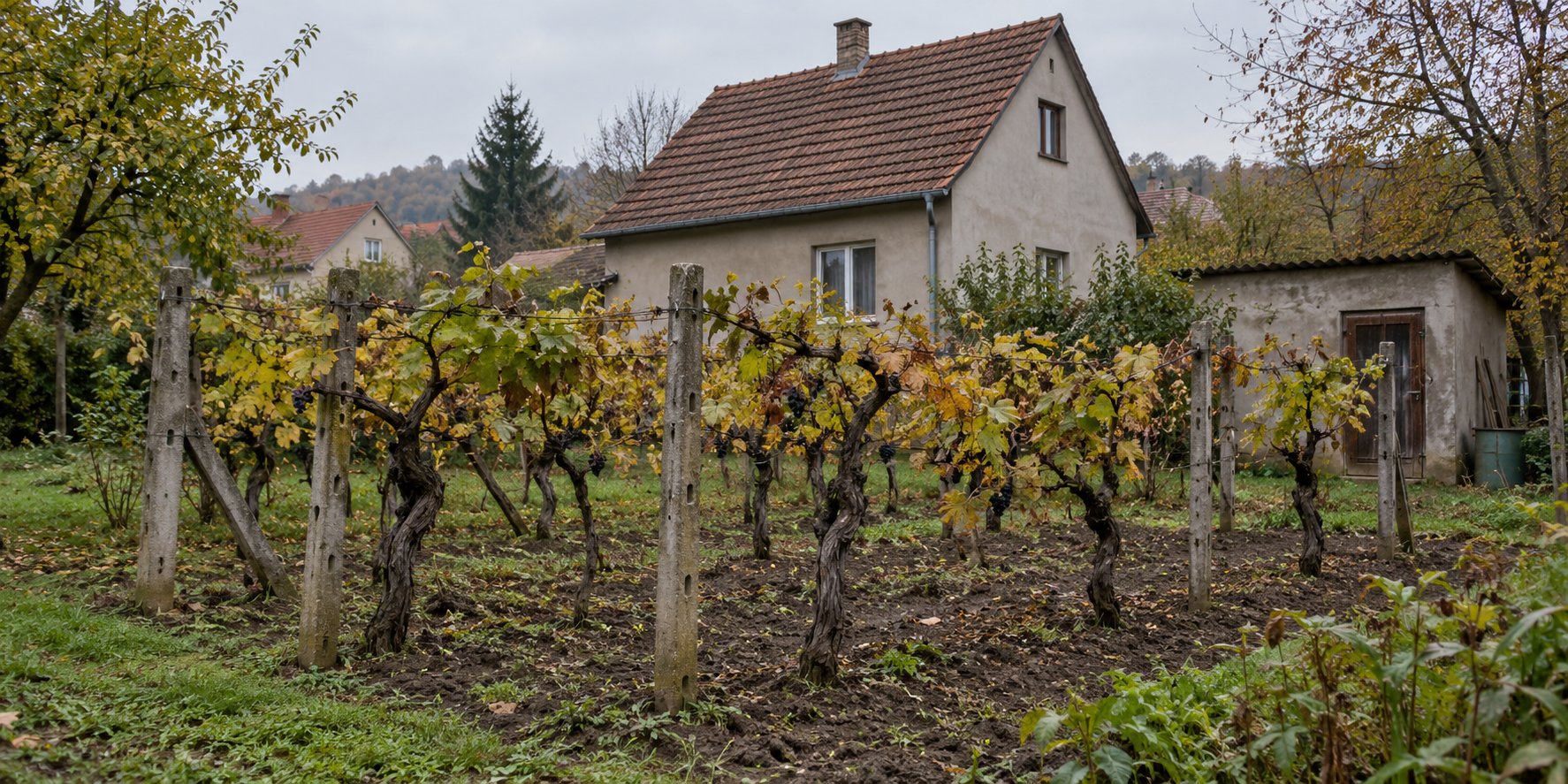
For the next twenty years the revival belonged to enthusiasts. People planted a few rows behind the house, made wine in the cellar, and shared it with friends and neighbours. They traded cuttings and advice, and learned from one another which grapes would survive a winter at −20 °C and a frost in May, and many of the answers turned out to be the hybrids and PIWI varieties that still make up about 80% of Polish plantings today.
Two dates changed that. Poland joined the European Union in 2004. In 2008 a wine law let small registered producers sell their own wine. When the register opened in 2009 it held twenty producers. It was a short list. But it meant that an estate of two hectares, once registered, could now put its own name on a label and sell the bottle.
Marta, who farms two hectares of loess over limestone near Sandomierz, is the kind of producer that law made possible. She is a composite rather than a portrait, drawn from many conversations, but her vineyard is a real kind of place. Sandomierz gets 550 to 800 millimetres of rain, the slopes face south toward the Vistula, and the Sandomierz Wine Route brings visitors to the cellar door. She makes a Solaris, a Riesling, and in good years a little red. Before 2008 that would have been a hobby. After it, it is a business, small and slow and her own.
The numbers since then are the clearest account of what happened. By the first quarter of 2025 Poland had 673 growers and 304 producers actively bottling wine. Vineyard area was 951 hectares in 2024 and passed 1,000 in 2025. The average vineyard is 1.4 hectares. The country did not rebuild its wine industry with large estates and cooperatives. It rebuilt it two hectares at a time.
Zielona Góra still holds its Winobranie every year. The vineyards around it are a fraction of what Grünberg had, and the centre of Polish wine has moved, toward Lower Silesia, the Vistula and the south. But the line runs unbroken in one sense. People in this country have kept making wine through frost, war and borders, and since 2008 they have been allowed to sell it. That is where our list begins: with small growers, a cool season, and a law that took twenty-six years after Jasło to arrive.